Chimney & Wood Burner Blog
Practical, NZ-specific articles on chimney sweeping, wood burner safety, maintenance, and council regulations.
Regional Regulations
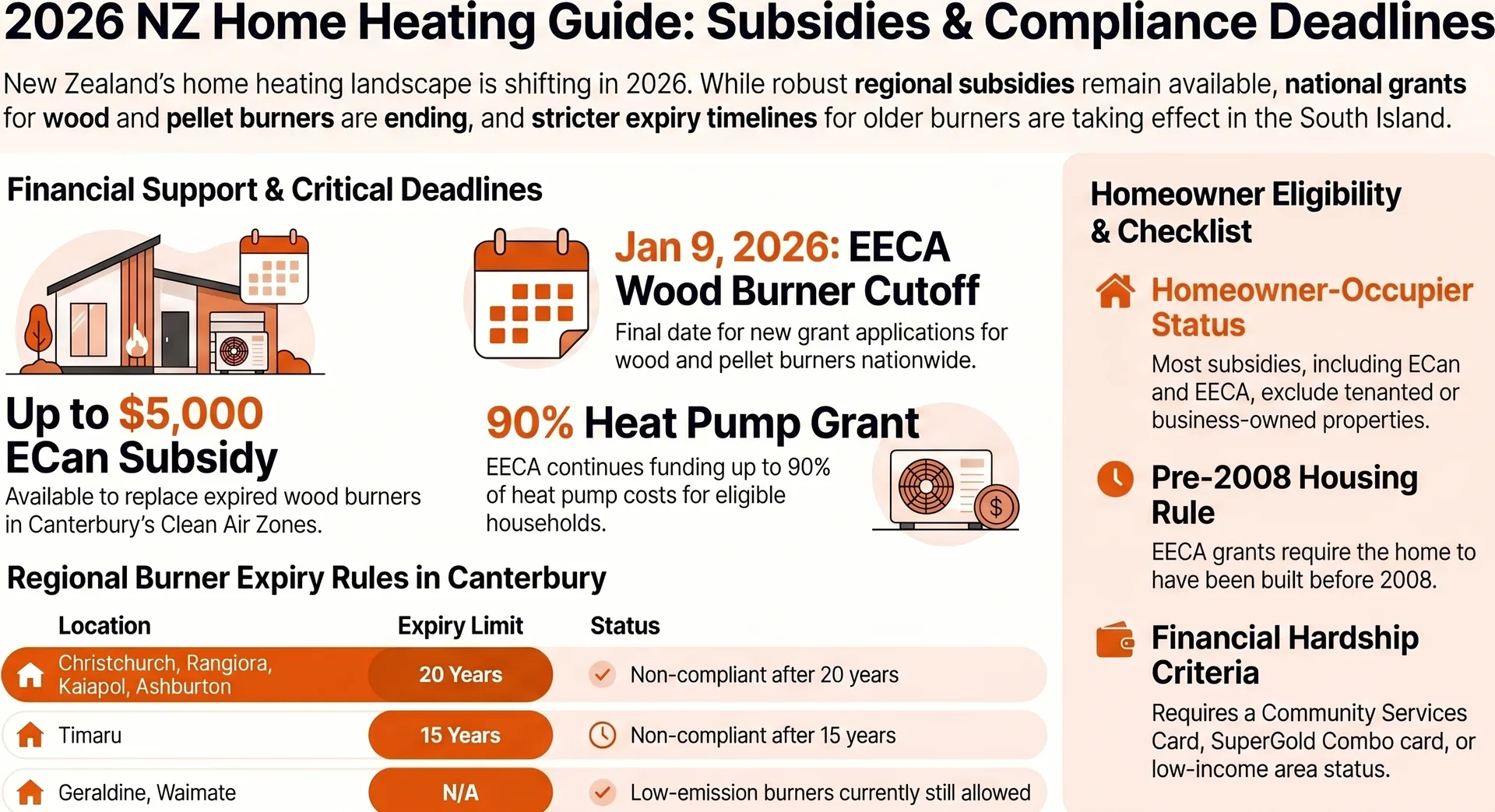
Wood Burner Replacement Subsidies NZ: What Help Is Still Available in 2026?
NZ wood burner replacement subsidies changed sharply in 2026. Warmer Kiwi Homes no longer accepts new wood or pellet burner grant applications, but regional help still exists. Canterbury has the clearest pathway with ECan subsidies up to $5,000 for eligible owner-occupiers replacing expired or expiring burners in Clean Air Zones. Rotorua, Hawke's Bay, Otago, and Nelson are driven by point-of-sale rules, airshed restrictions, and approved appliance lists.
Maintenance & Troubleshooting
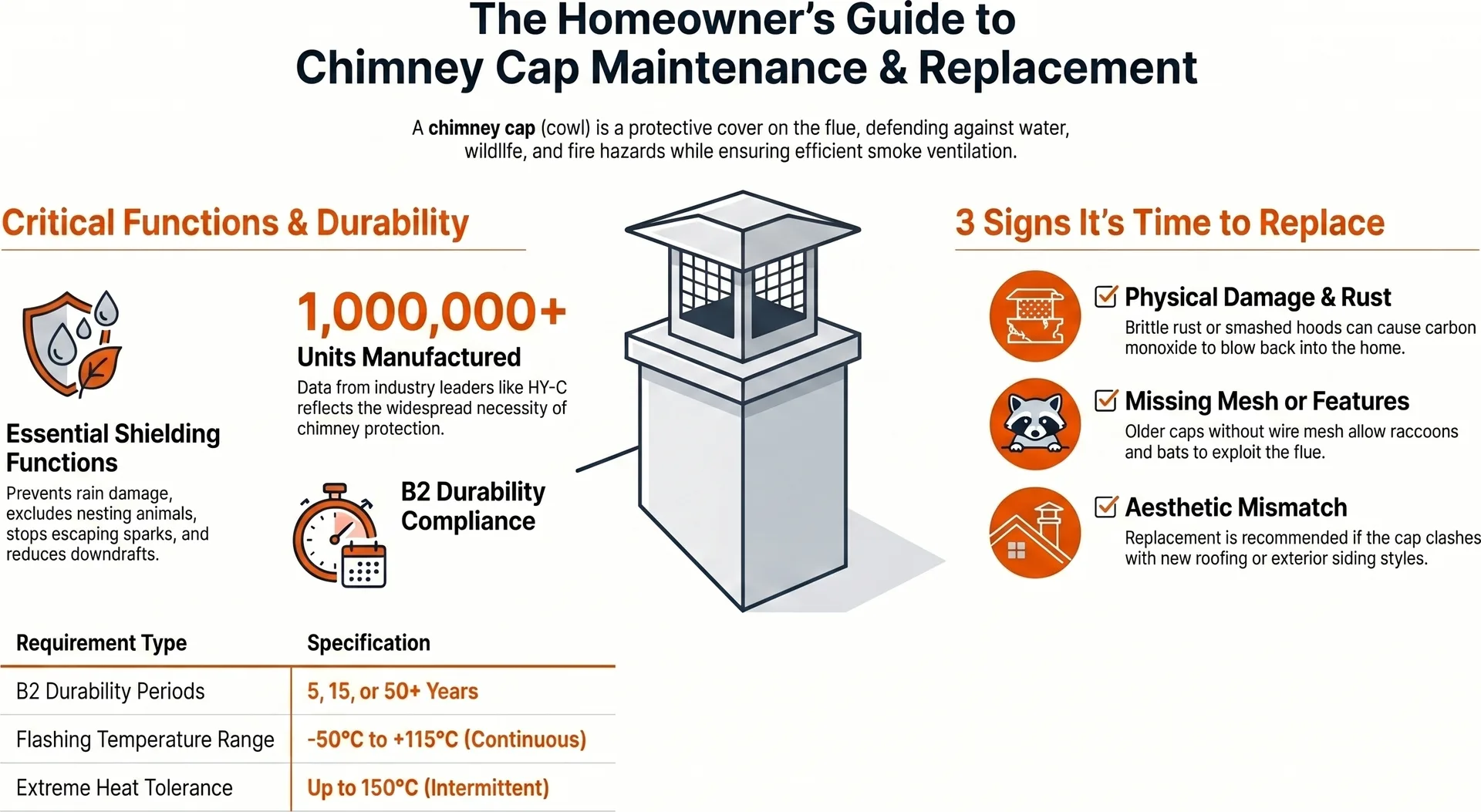
Chimney Cap Replacement NZ — Costs & When to Replace
NZ chimney cap replacement guide — the four jobs a working cap performs (rain, wildlife, sparks, downdraught), the seven cowl types stocked in NZ (anti-downdraught, bird guard, rotating, spark arrestor, Dektite flashing, fire damper, blanking cap), Building Code Clause B2 durability tiers (50 / 15 / 5 years), and full installed pricing $80–$5,000+. Includes coastal salt-air guidance and the cascade from $500 cap failure to $25,000 chimney rebuild.
Maintenance & Troubleshooting
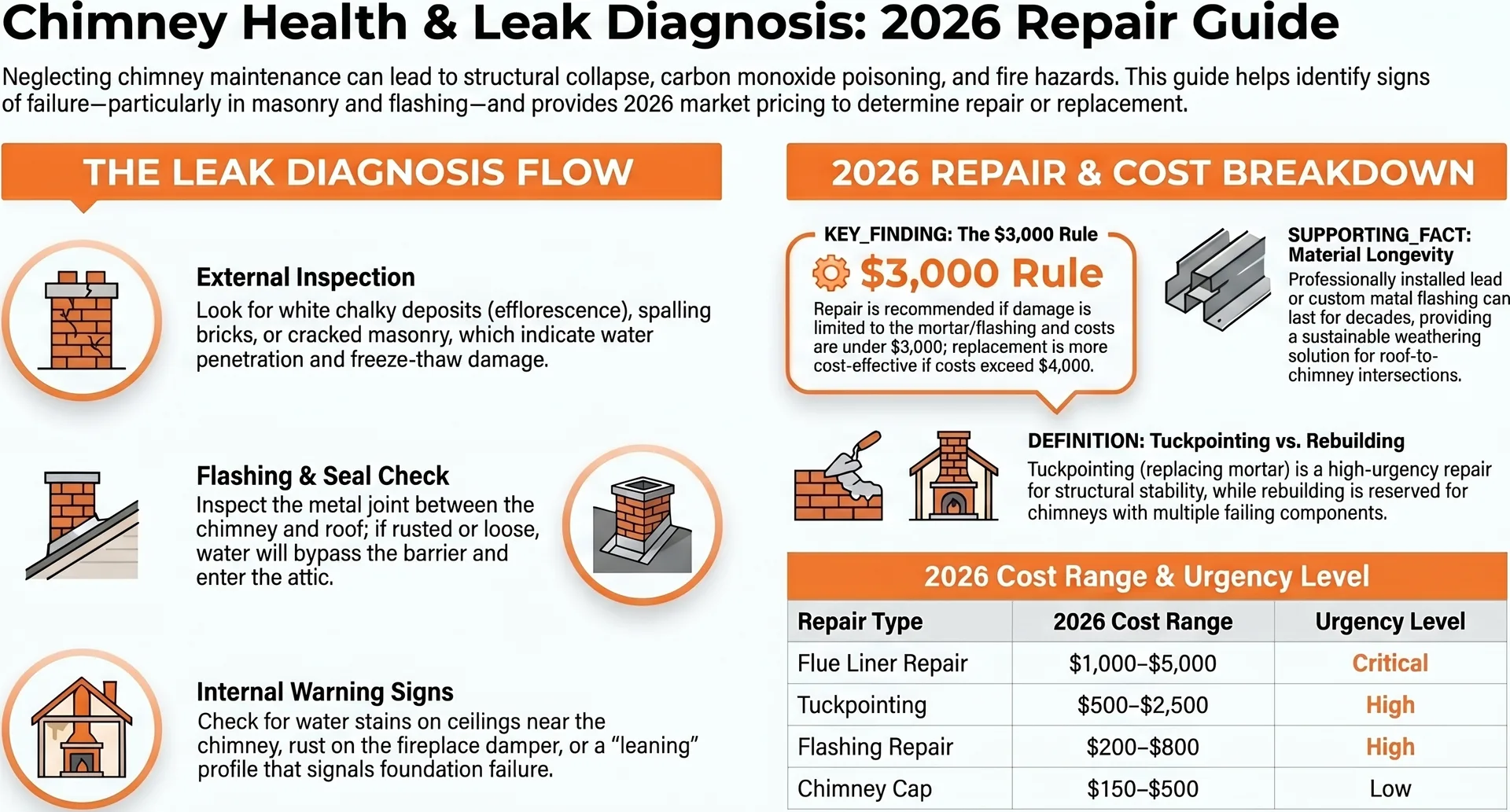
Chimney Flashing Leak Repair NZ — Diagnosis & Costs
NZ chimney flashing leak repair — what flashing is, why it leaks (improperly installed wood-burner penetrations + age corrosion), the four NZ-standard materials (Dektite EPDM/silicone, lead apron, zincalume, copper), repair tiers from $200 reseal to $5,000 full replacement, and how to choose between repair and full re-flash.
Problems & Solutions
Chimney Smoke Problems NZ — Troubleshooting Guide
Why smoke comes back into NZ homes, how to diagnose cold flue, wet wood, blocked flues, negative pressure and wind downdraught, and when FENZ, NZHHA, and AS/NZS 2918 guidance says to stop and call a professional.
Insurance & Safety
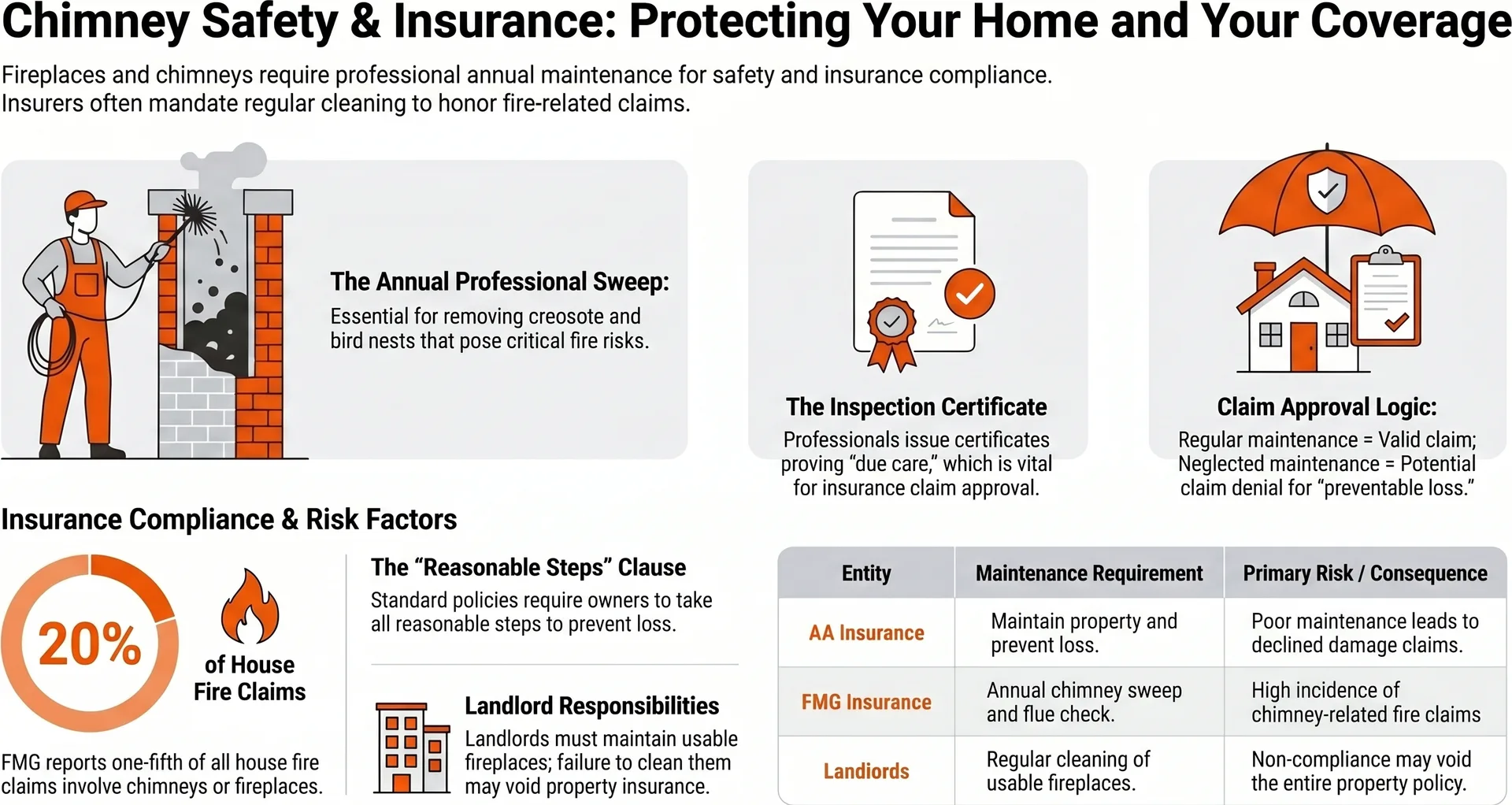
Chimney Sweep Certificate NZ — Insurance Guide
What an NZ chimney sweep certificate actually is, why every major insurer (FMG, IAG, AA, Tower, Vero, State, ASB) wants to see one, and what happens to your fire claim without it. Includes the insurer-by-insurer requirement breakdown and what a compliant certificate must contain.

Safety & Compliance
Chimney Sweep Certifications NZ — Master Sweep & NZHHA
What NZ chimney sweep certifications actually mean — Master Sweep, NZHHA accreditation, NZQA qualifications. How to verify a sweep's credentials and which certifications matter for insurance.
Commercial & Strata
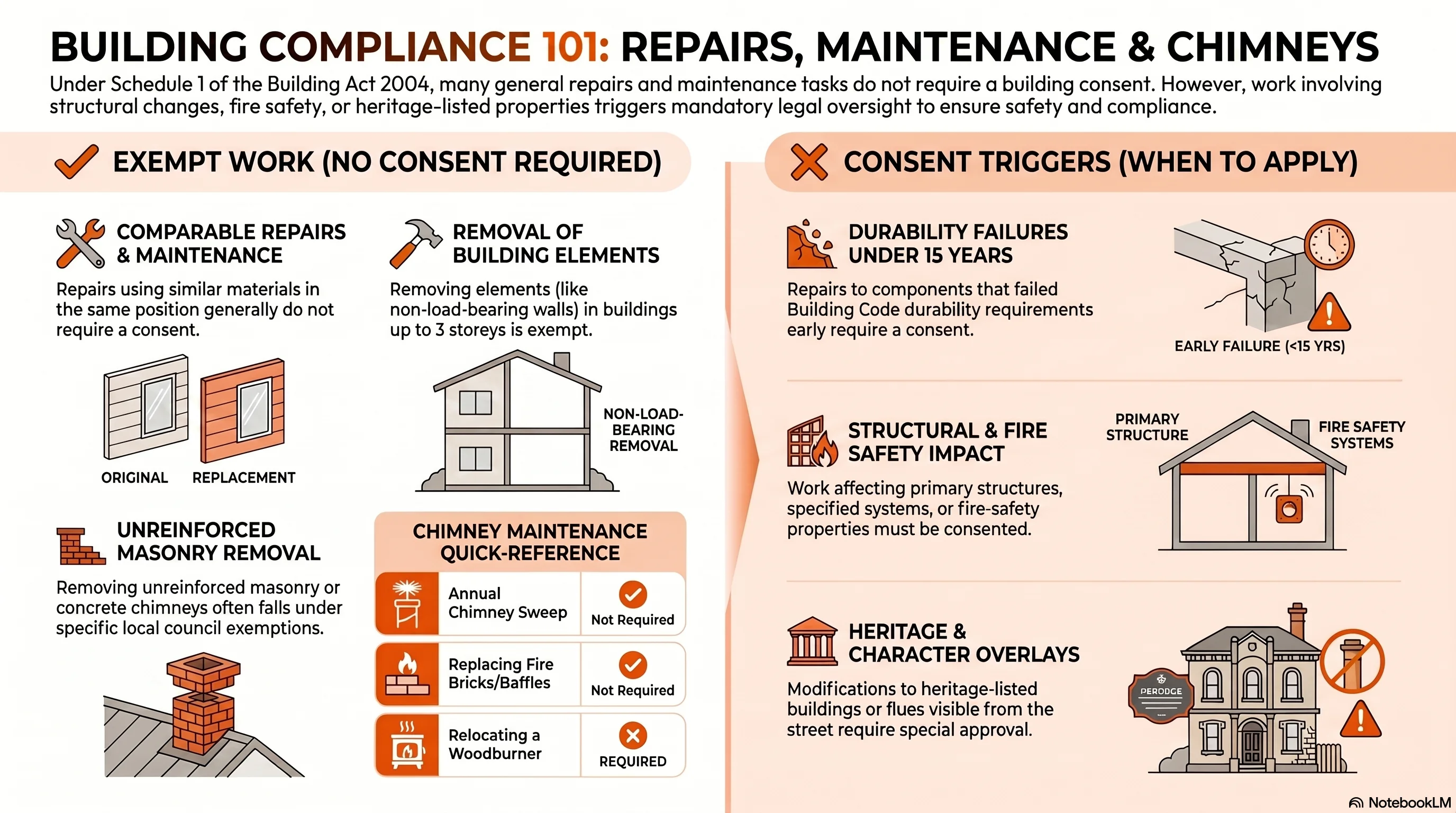
Heritage Property Chimney NZ — Listed Building Maintenance
Heritage property chimneys in NZ — what makes them different, when you need consent for repairs and removals, how earthquake risk changes the calculation in Wellington, and why the "replica chimney" solution exists. Includes the FENZ fire risk reality, insurance obligations, and NZHHA-approved approach to making an old chimney safe without gutting the character of a pre-1920 home.
Seasonal Care
Holiday Home Chimney Checklist NZ — Bach Maintenance Guide
Pre-arrival and post-departure chimney checks for NZ holiday homes and baches. What to inspect, what to bring, and how to keep the wood burner safe for occasional use across long unattended gaps.
Fuel & Performance
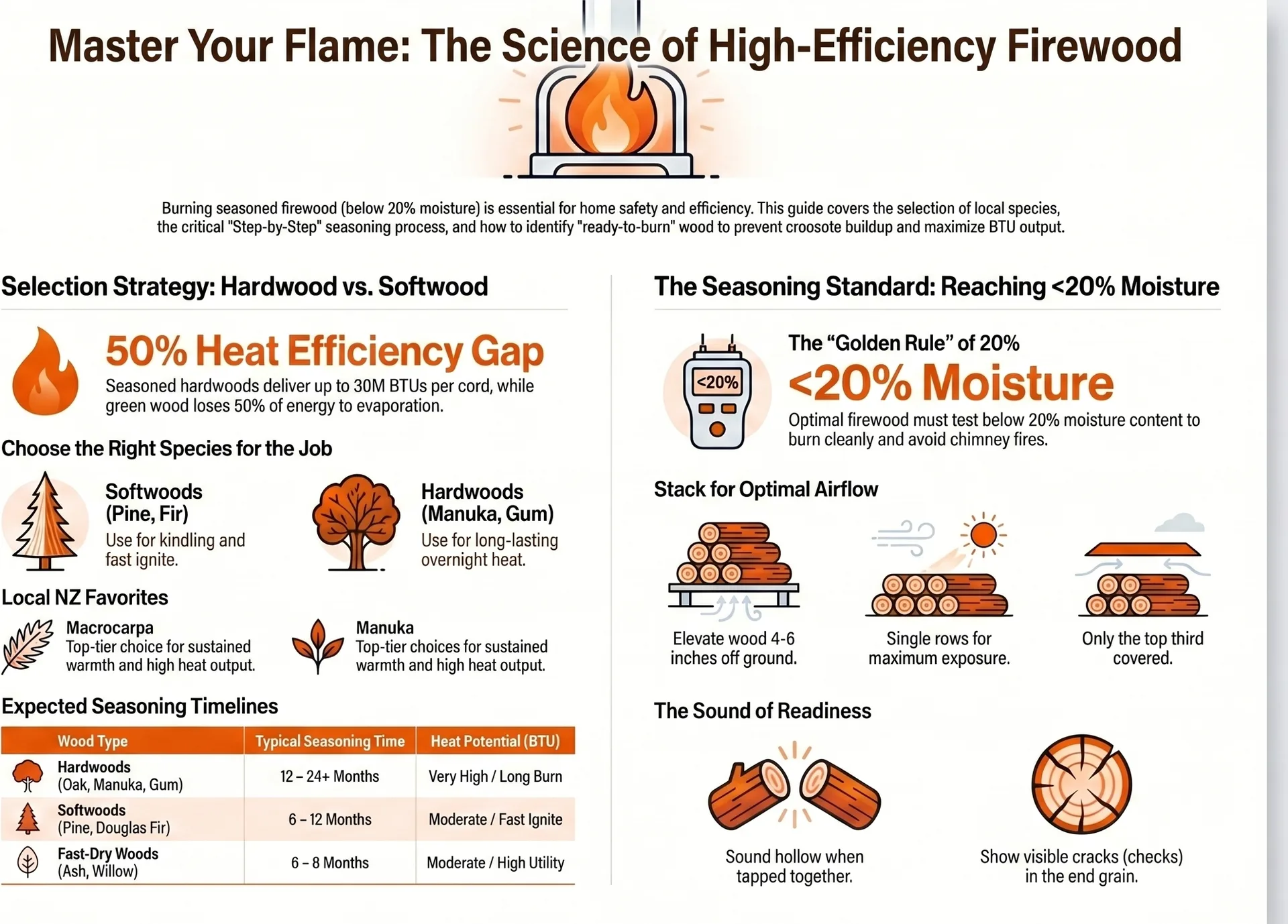
How to Season Firewood NZ — Step-by-Step Guide
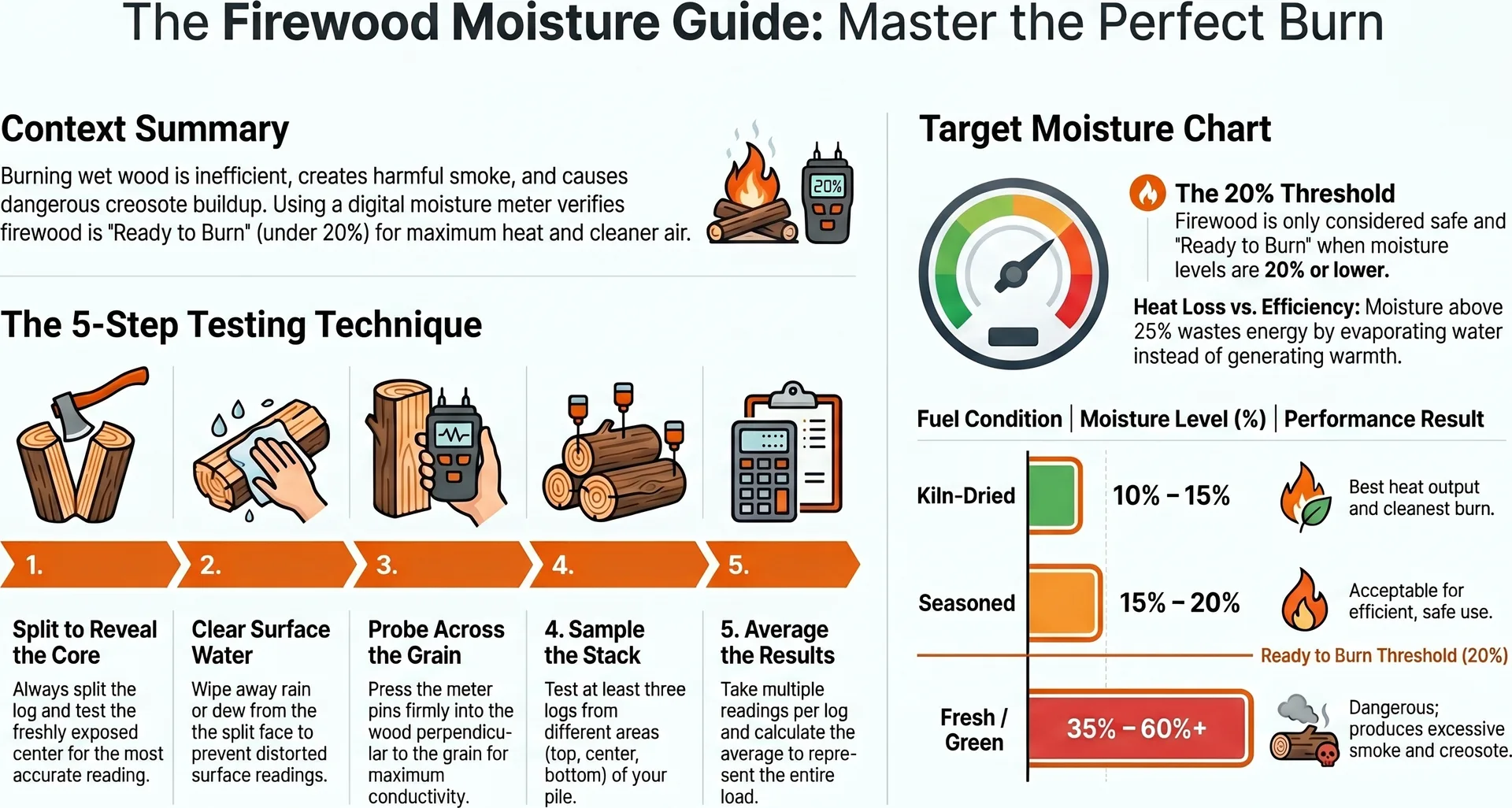
How long firewood actually takes to season in NZ — by species, climate zone, and stacking method. Target under 20% moisture. Manuka needs 3-5 years; Blue Gum 5-6 years; Oak 18-24 months; Pine 6-12 months. Properly seasoned wood delivers 40-60% more usable heat than green. Includes the four-test verification method NZ sweeps actually use on-site.
Fuel & Performance
How to Test Firewood Moisture in NZ — Meter Guide
How to test firewood moisture properly in NZ — the correct pin-meter technique that matters more than the meter you buy. Split a fresh face, press pins across the grain in three spots, average the readings. Target under 20% for clean burns and minimum 25% for safety. NZ meters: $30-$50 from Trade Tested, BBQs Direct, STIHL Shop.
Safety & Compliance
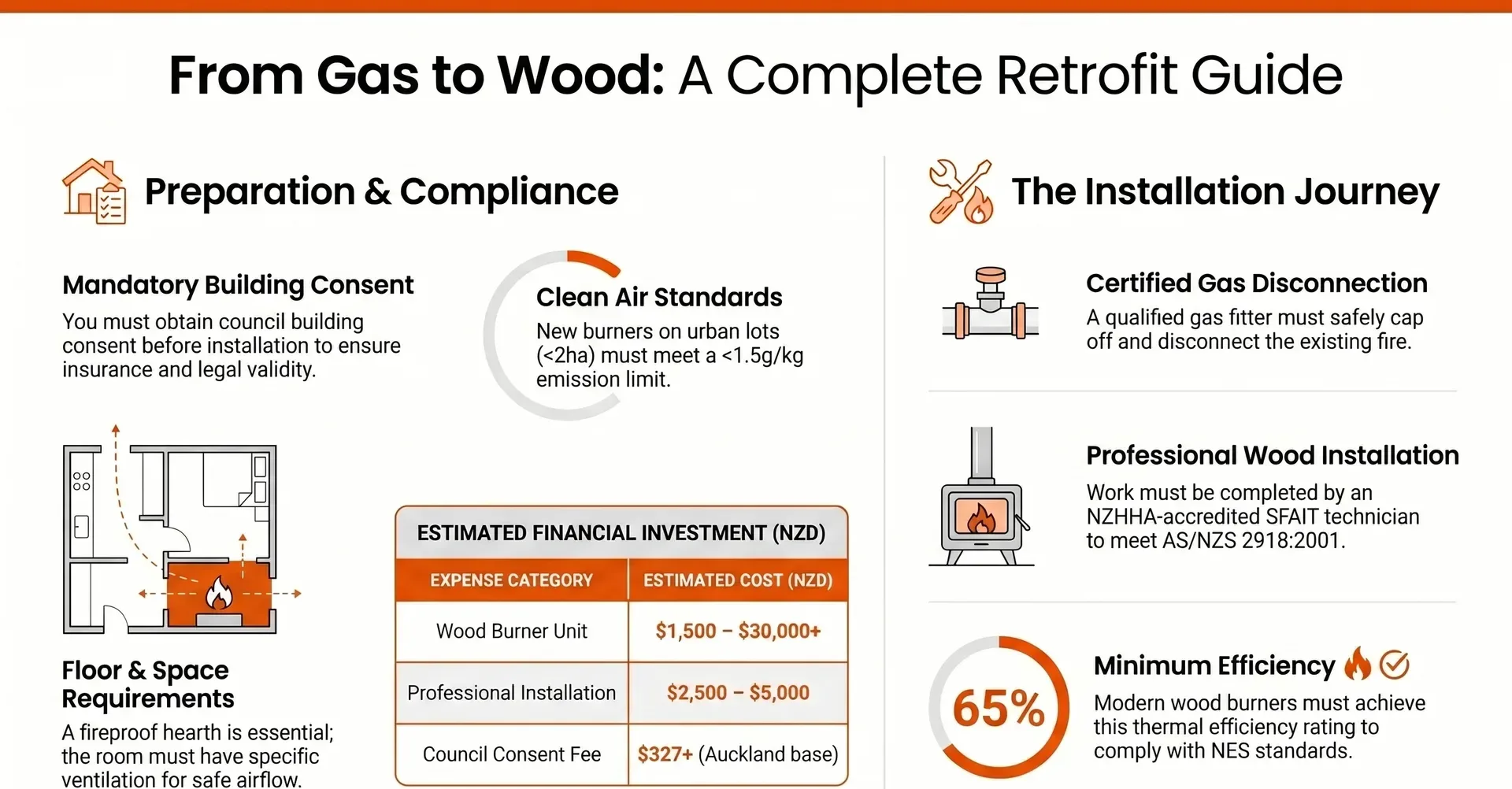
Installing a Wood Burner in NZ — Permits, Costs, Timeline
Installing a wood burner in NZ requires building consent — no exceptions. This guide covers what the consent covers, why gas-to-wood installs need a specific three-trade sequence, what the National Environmental Standards (NES) appliance requirements are, and the real cost breakdown: $1,500-$30,000+ appliance plus $2,500-$5,000 labour plus council fees.

Commercial & Strata
Multi-flue Property Maintenance NZ — Heritage & Commercial
How to maintain properties with multiple chimneys in NZ — heritage homes, B&Bs, commercial buildings. Pricing schedules, certification requirements, and bundle strategies that save 30-50%.

Technical Guides
What Chimney Sweep Tools Actually Do — NZ Equipment Guide
What's inside an NZ chimney sweep's toolkit. Brushes, vacuums, CCTV cameras, rod systems, and what each does on a job. Helps homeowners understand quotes and what they're paying for.
Costs & Pricing
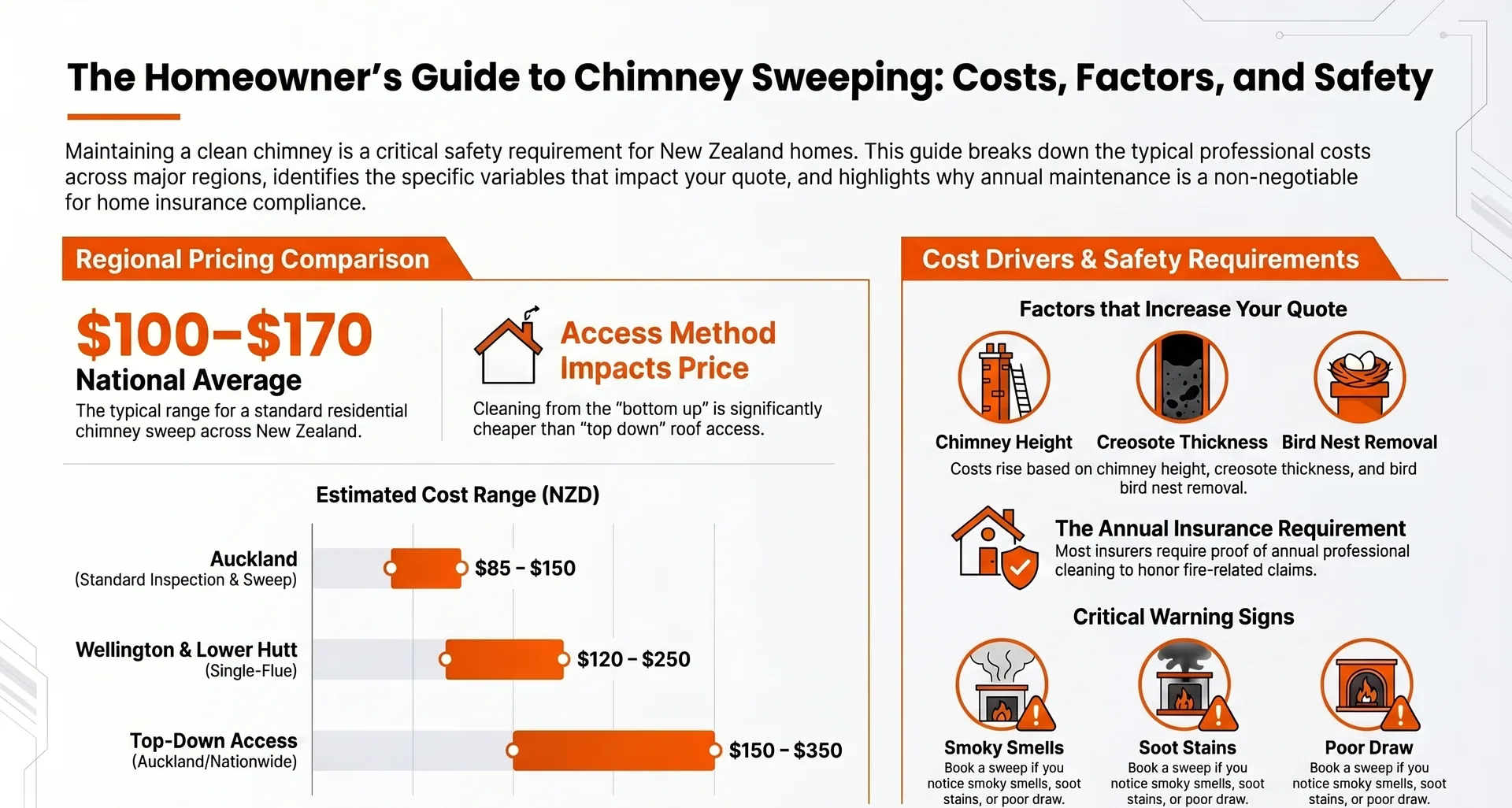
What Chimney Sweeps Charge in NZ — 6-Region Comparison
NZ chimney sweep cost comparison — Auckland, Wellington, Christchurch, and regional pricing. Bottom-up vs top-down rates, what affects the price, multi-flue savings, and how to spot a sweep that is over- or under-charging. National average $100-$170; Auckland $85-$350; Wellington $120-$250.
Safety & Compliance
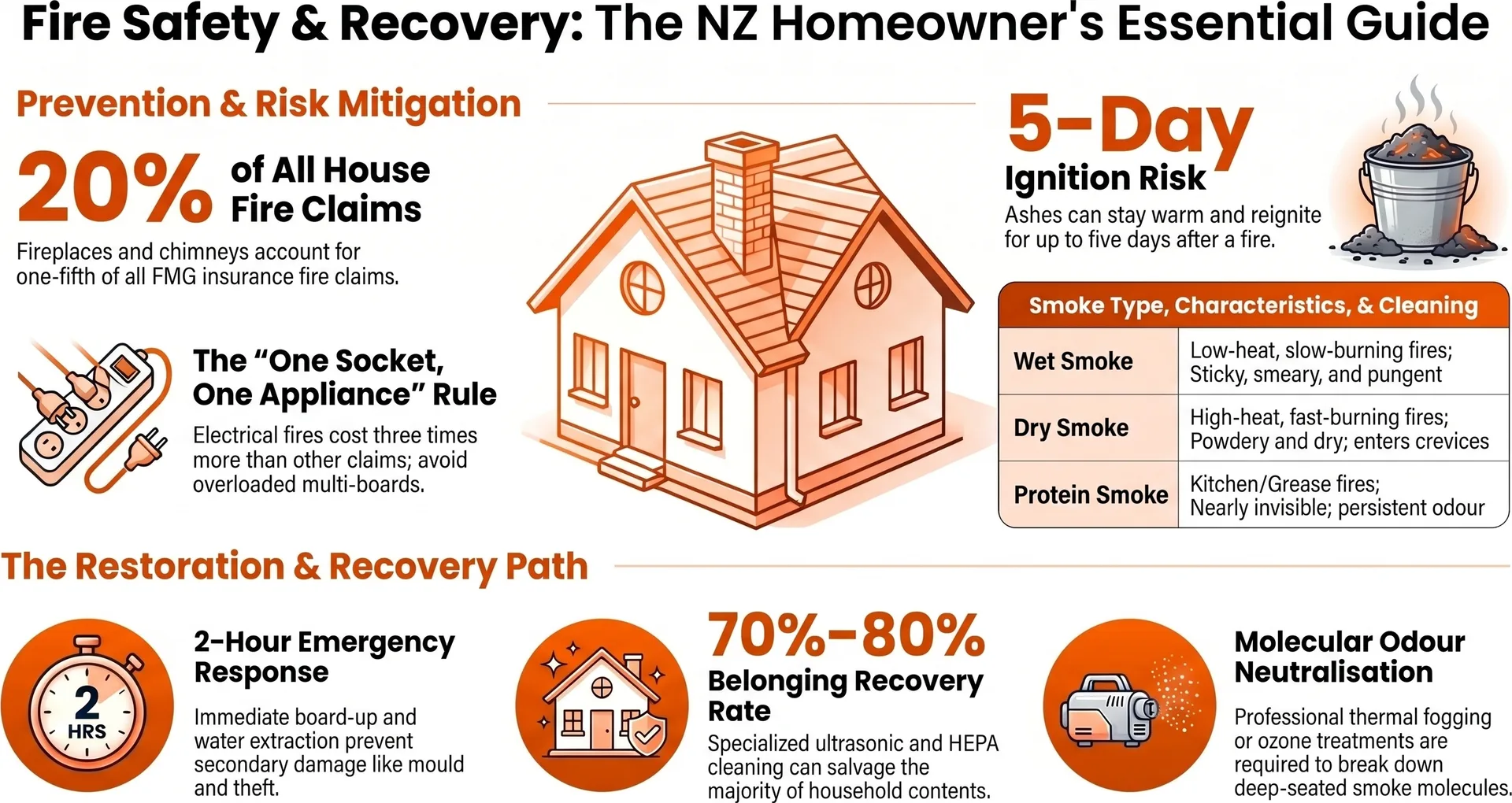
What to Do After a Chimney Fire NZ — Recovery Guide
A complete recovery guide for NZ homeowners after a chimney fire. Immediate safety steps, the insurance claim process, the 5 damage types professional restorers identify, restoration timelines (1 week to 6+ months), when to repair vs replace the flue, and how to prevent the next one. Grounded in FMG, FENZ, and IICRC restoration data.
Seasonal Care
Winter Prep Chimney Checklist NZ — Before First Fire
The 10-step NZ winter chimney prep checklist. What to do in autumn (March-May) so your first winter fire is safe, efficient, and insurance-compliant.
Technical Guides
Chimney Sweep FAQ NZ — 12 Questions Homeowners Ask
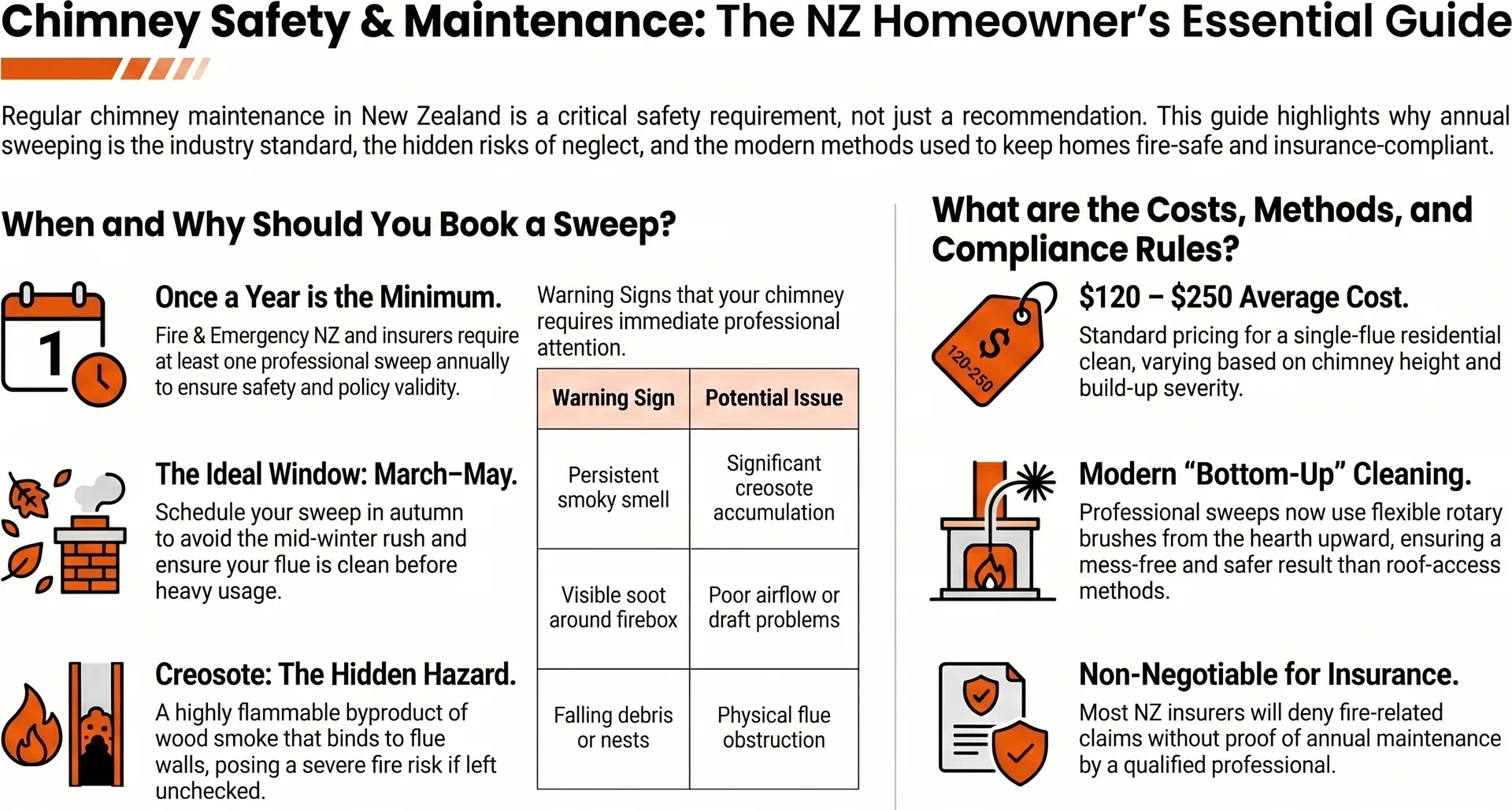
The 12 most common questions NZ homeowners ask their chimney sweep — answered with the data Fire and Emergency NZ, the NZ Home Heating Association, and NZ insurers actually use. Frequency, cost, what is included, certificates, insurance, and the practical questions that come up at the kitchen table.
Regional Regulations
Wood Burner Emission Limits NZ — 2026 Council Map
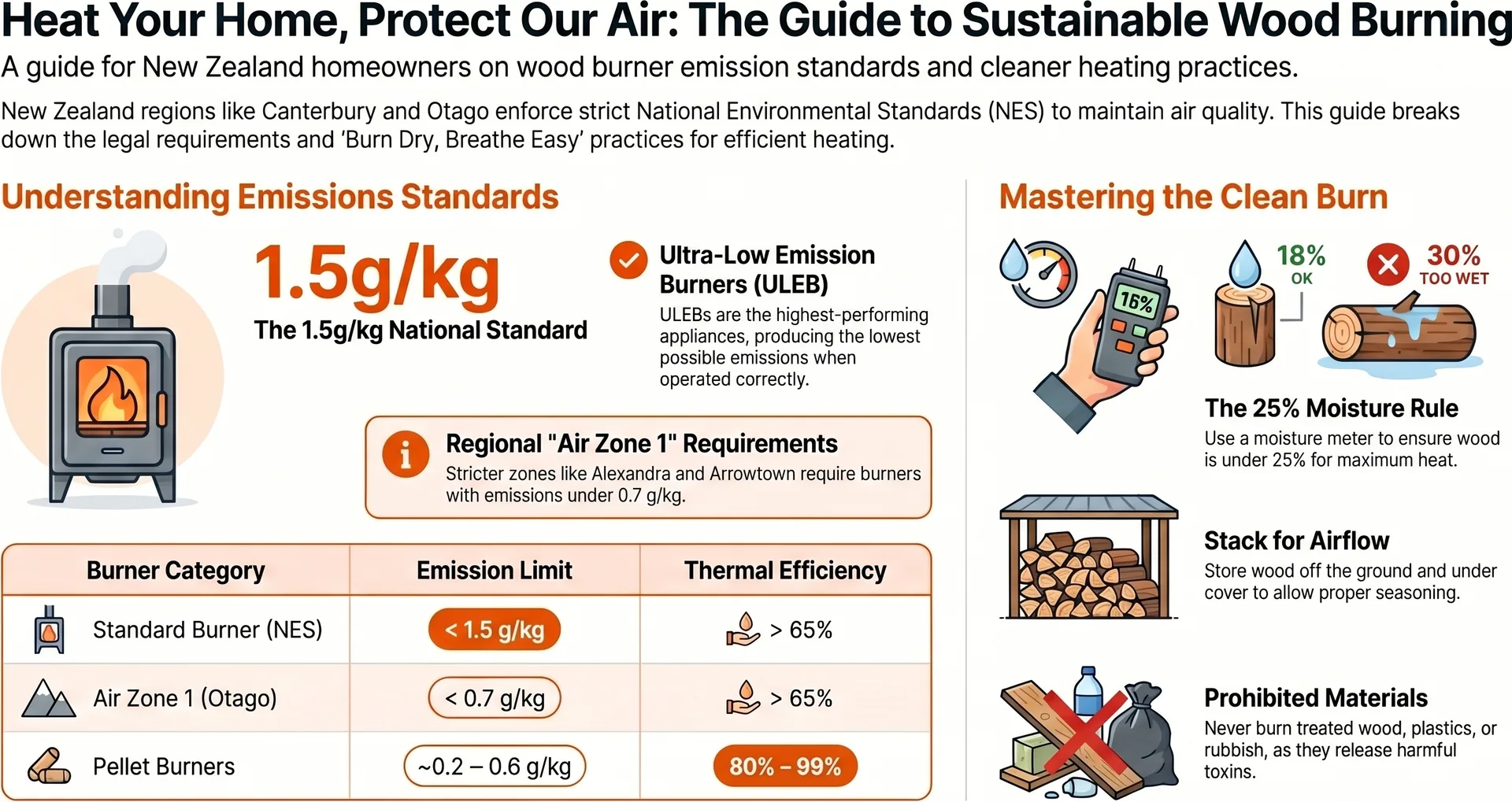
NZ wood burner emission limits — what the three national tiers actually mean, which regions have stricter local rules (Canterbury, Otago, Nelson-Marlborough), and what happens if you burn a non-compliant appliance in a Clean Air Zone. Includes current subsidy programs to replace illegal burners at 80-90% council funding.
Chimney Cleaning
Creosote — The 3 Stages in NZ Chimneys (2026)
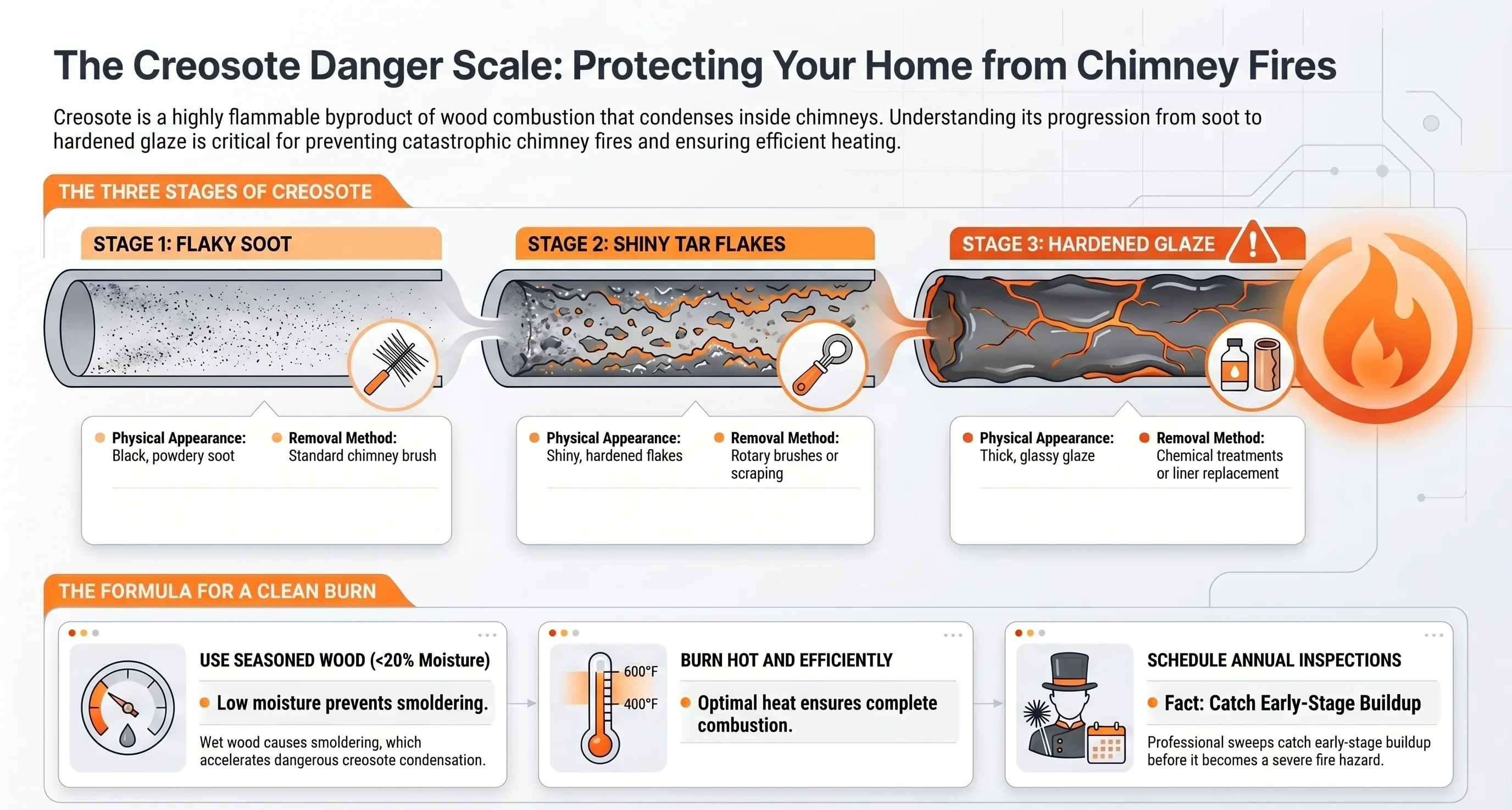
Creosote is the tar-like residue from burning wood at low temperatures — and the single biggest cause of chimney fires in NZ. This guide explains the three stages (fluffy soot, hardened tar, glazed coal-tar), why NZ wood burners produce more creosote than UK or US equivalents, how fast each stage develops, and what each level costs to remove. Covers firewood choices, burning style, prevention, and when to inspect.
Chimney Cleaning
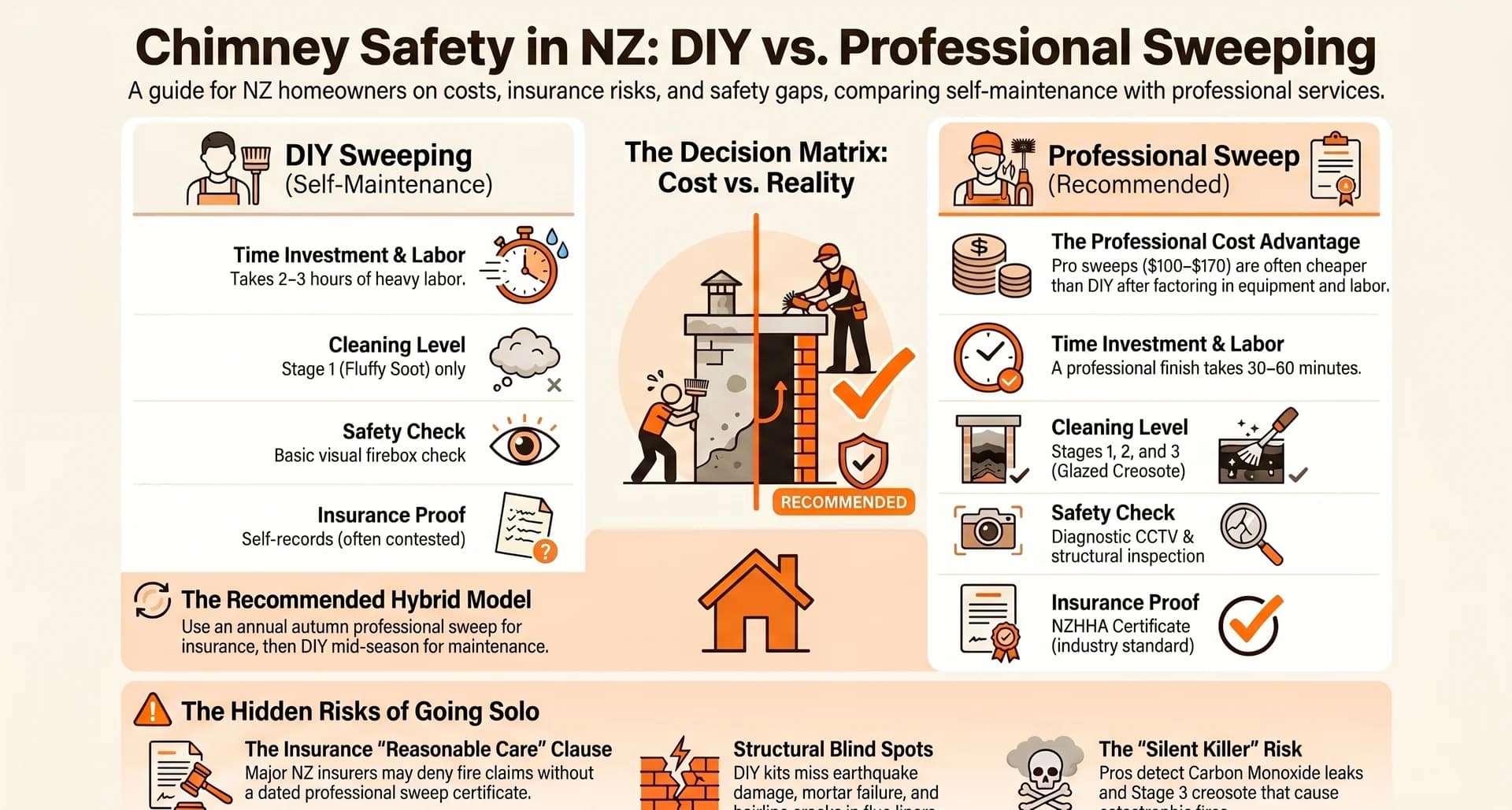
DIY vs Professional Chimney Sweep — NZ 2026
DIY chimney sweeping is legal in NZ but rarely the right call once you account for time, equipment cost, missed-issue risk, and insurance documentation. This guide walks through DIY kits available at Bunnings and Mitre 10, what creosote sticks really do, when DIY is reasonable, and when to absolutely call a professional.
Chimney Cleaning
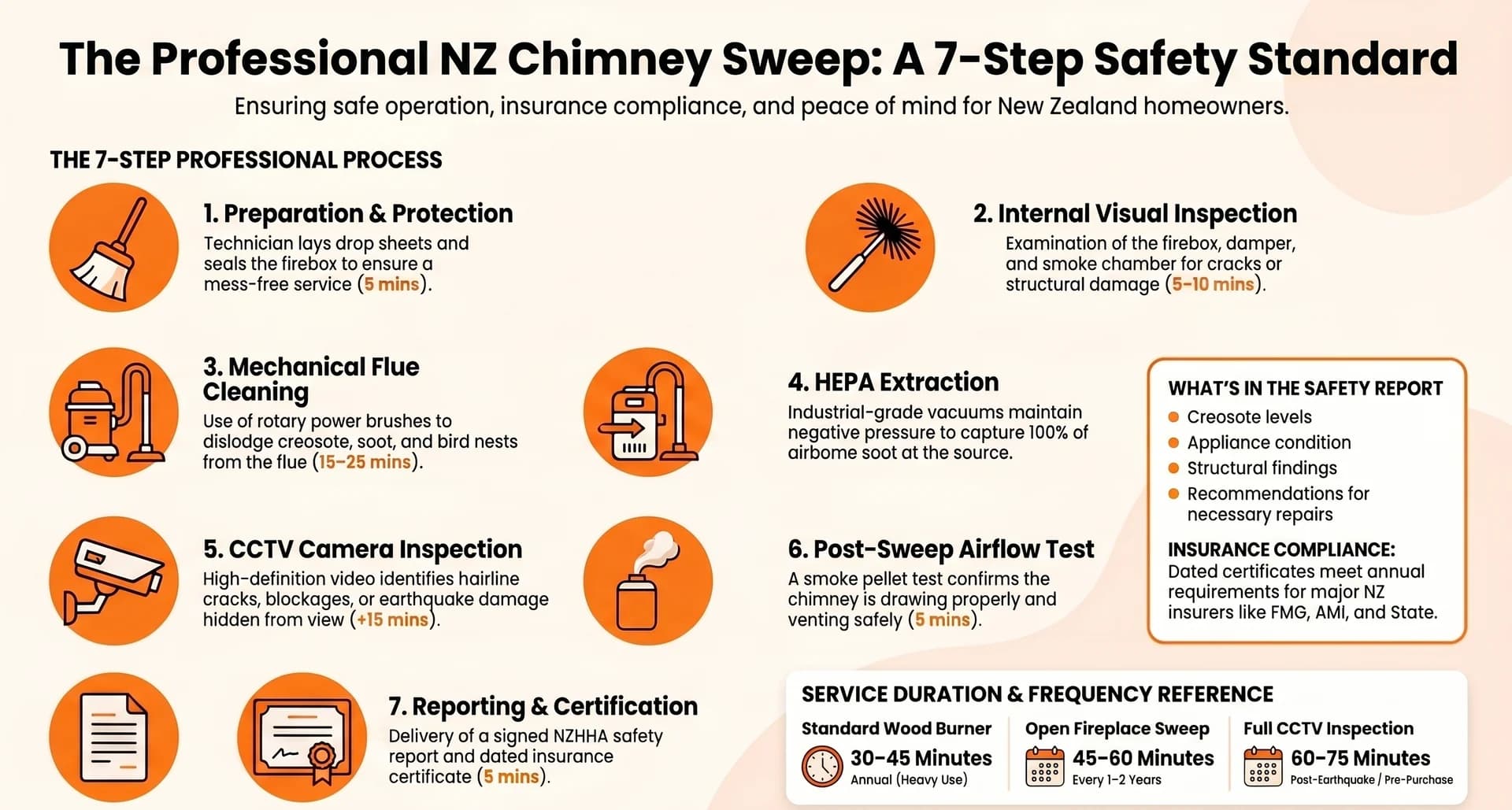
What Happens During a Chimney Sweep — NZ 2026
A professional NZ chimney sweep is a methodical 30–60 minute, seven-step service: floor protection, inspection, mechanical brushing, HEPA vacuum capture, optional CCTV, draught test, and certificate. This guide walks through each step, the tools used, and what to expect from your safety report.
Chimney Cleaning
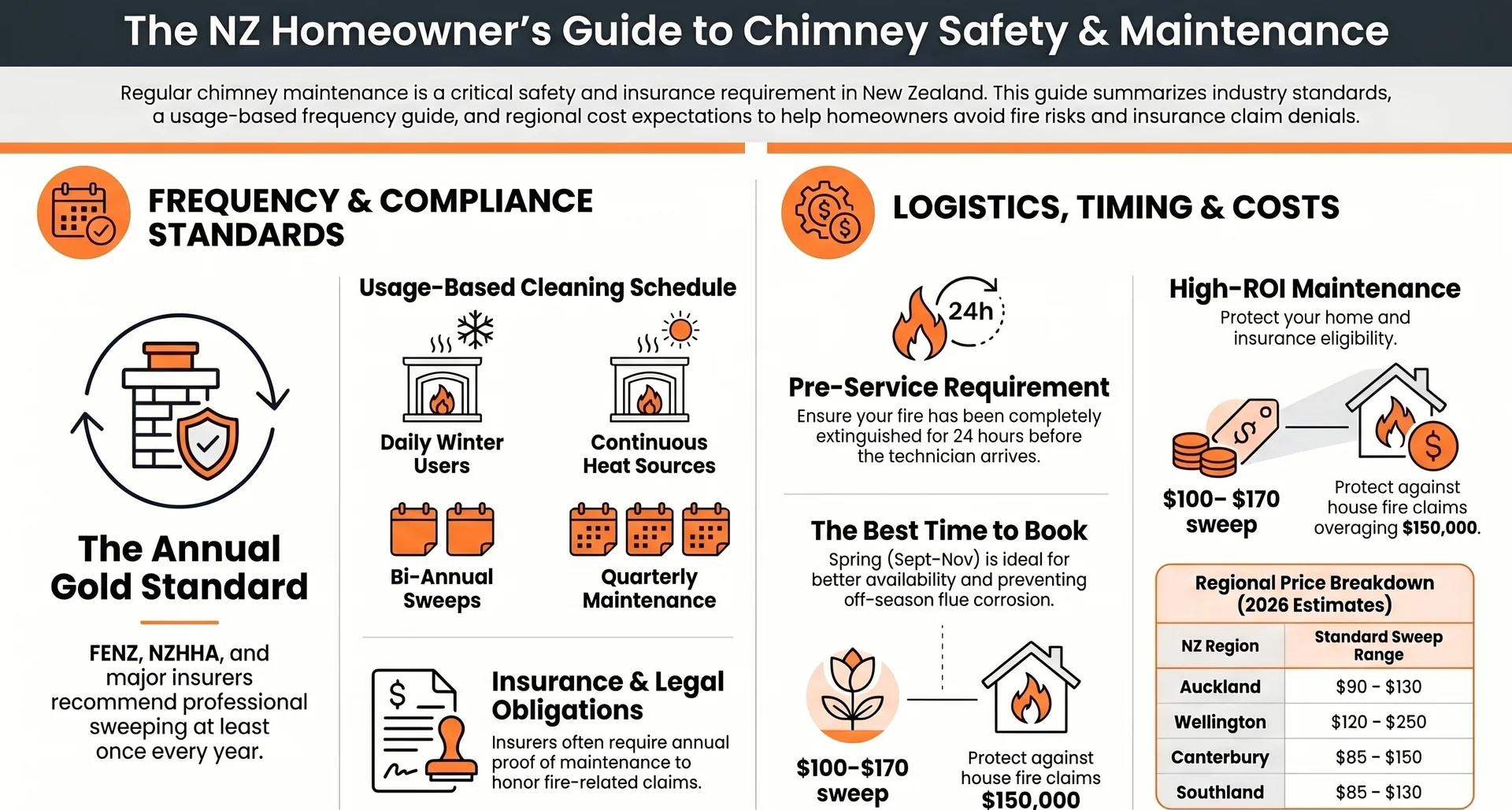
How Often to Sweep a Chimney in NZ (2026)
Every NZ chimney should be swept at least once a year. FENZ, the NZHHA, and most insurance companies all agree. Heavy users need bi-annual sweeping. This guide covers frequency recommendations, insurance requirements, costs, and NZ-specific data.
Fuel & Performance
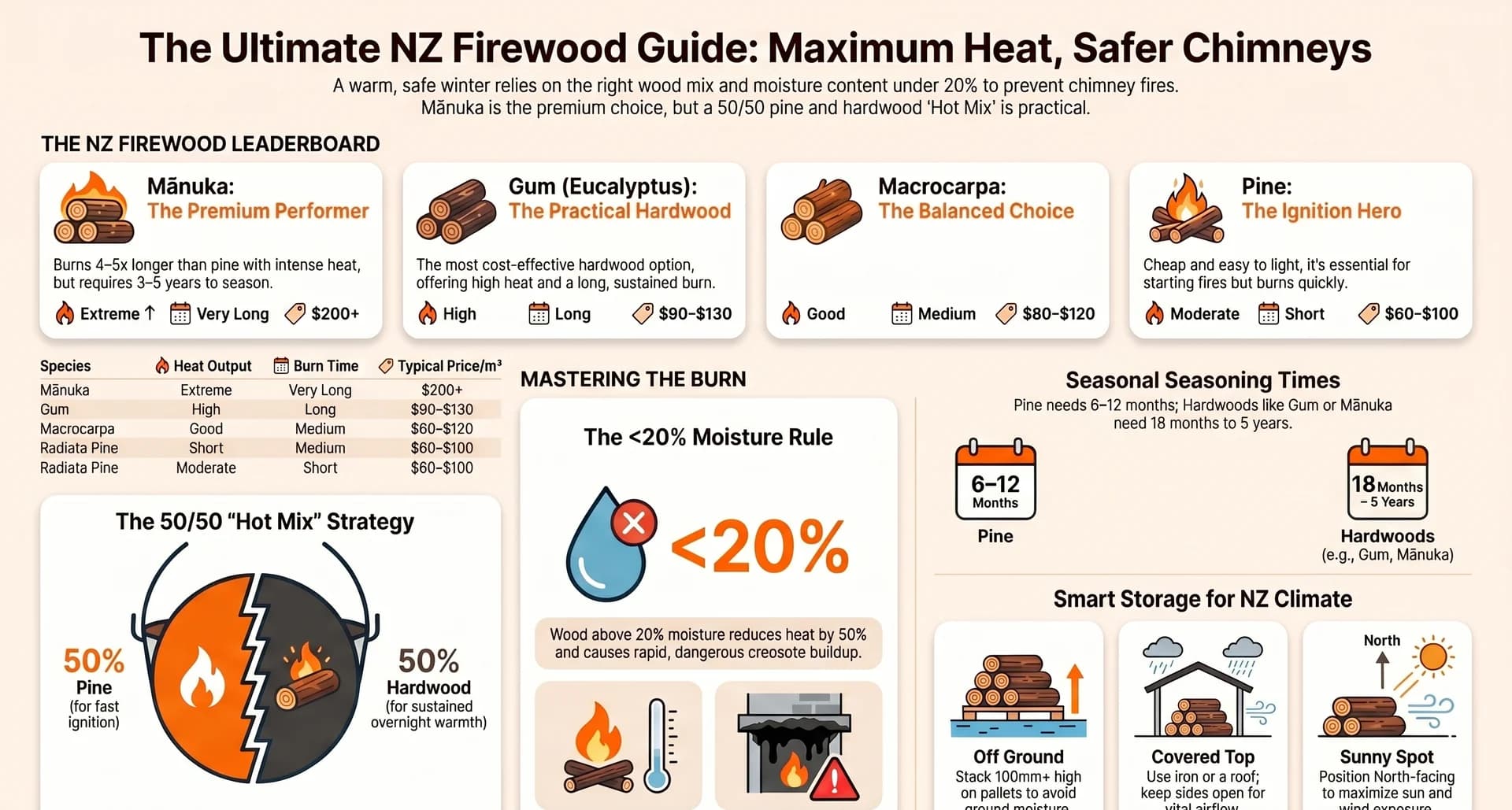
Best Firewood in NZ — Heat, Burn Time & Price (2026)
Mānuka is the best-performing firewood in New Zealand — it burns the longest, produces the most heat, and creates the least creosote. But at $200+ per cubic metre, it's expensive and hard to source in bulk. For most NZ homeowners, a "hot mix" of 50% pine and 50% hardwood offers the best balance of ignition speed, heat output, burn time, and cost. The single most important factor isn't the species — it's moisture content.
Chimney Safety
Chimney Fire Causes & Prevention — NZ 2026
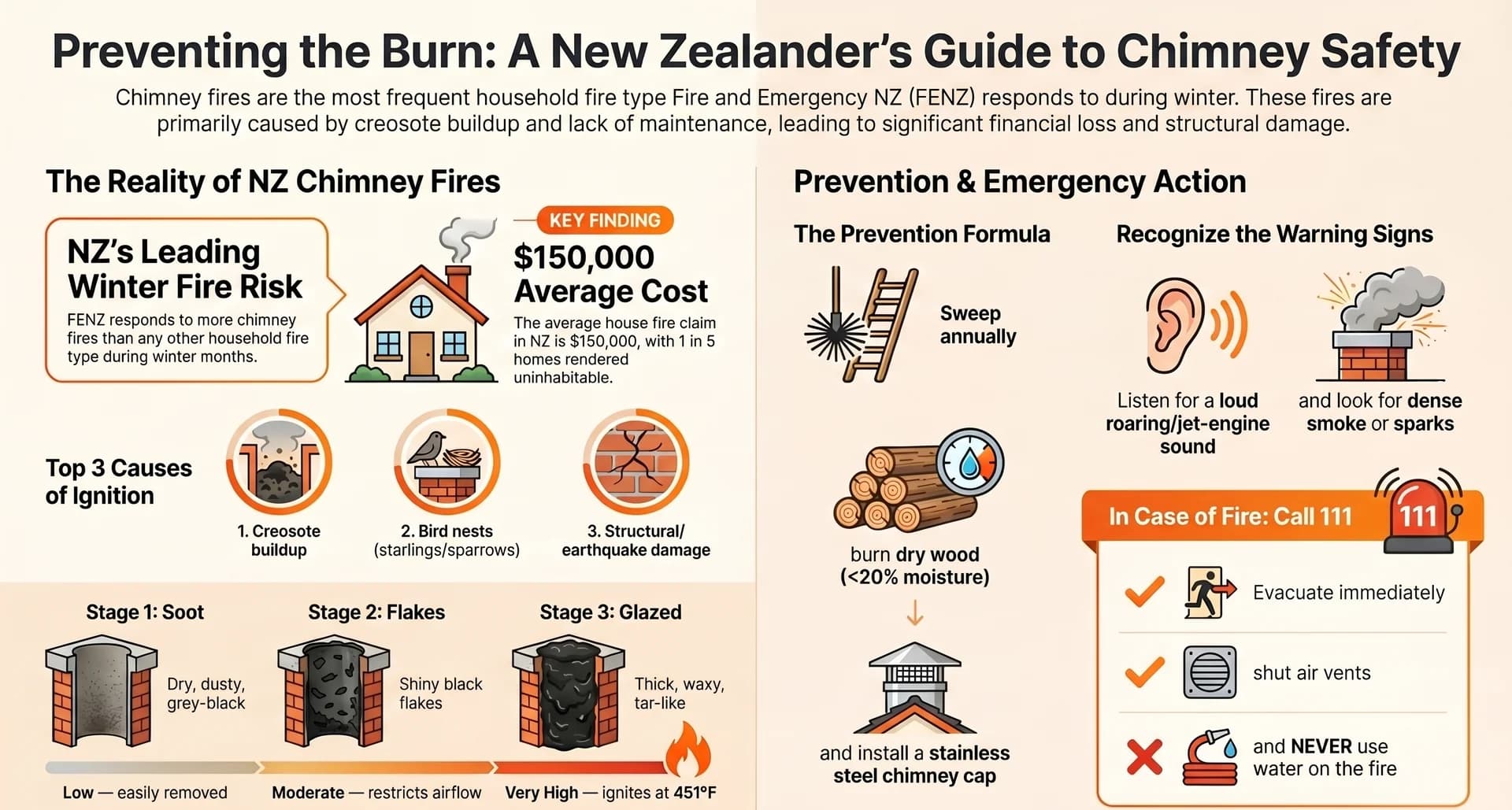
Chimney fires in New Zealand are caused by creosote buildup inside the flue — the result of burning wet wood, running fires on low smouldering settings, and skipping annual sweeps. FENZ responds to more chimney fires than any other household fire type during winter. Prevention is straightforward: sweep annually, burn dry seasoned wood below 20% moisture, and never let creosote progress past Stage 1.
Landlord Compliance
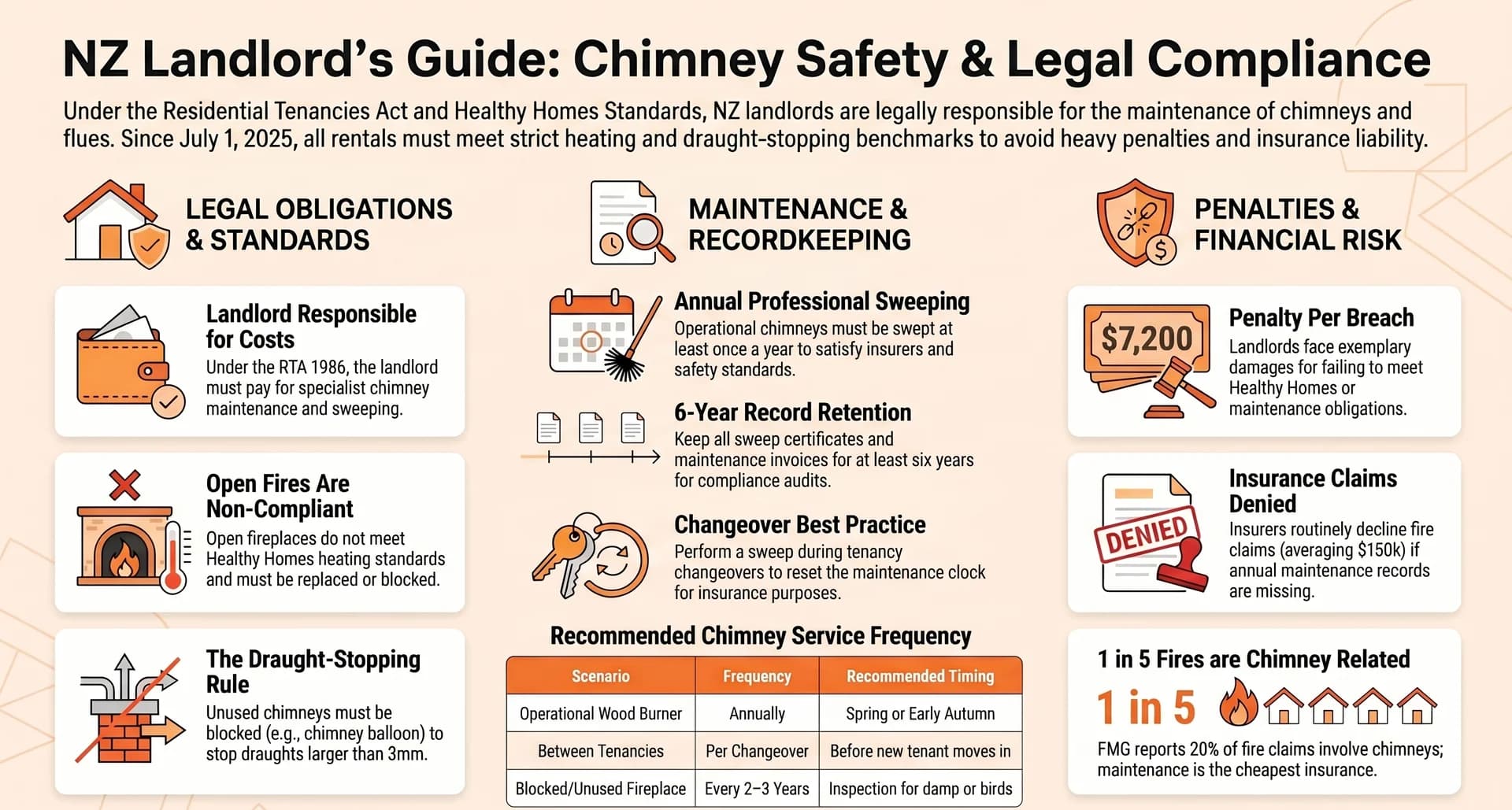
Landlord Chimney Maintenance NZ — 2026 Guide
NZ landlords are legally required to maintain chimneys and fireplaces in rental properties under both the Residential Tenancies Act and the Healthy Homes Standards. Open fireplaces don't meet the heating standard — they must be replaced with a compliant heater or blocked off. Non-compliance carries penalties of up to $7,200 per breach.