Chimney Flashing Leak Repair NZ — Diagnosis & Costs
NZ chimney flashing leak repair — what flashing is, why it leaks (improperly installed wood-burner penetrations + age corrosion), the four NZ-standard materials (Dektite EPDM/silicone, lead apron, zincalume, copper), repair tiers from $200 reseal to $5,000 full replacement, and how to choose between repair and full re-flash.
Quick Answer
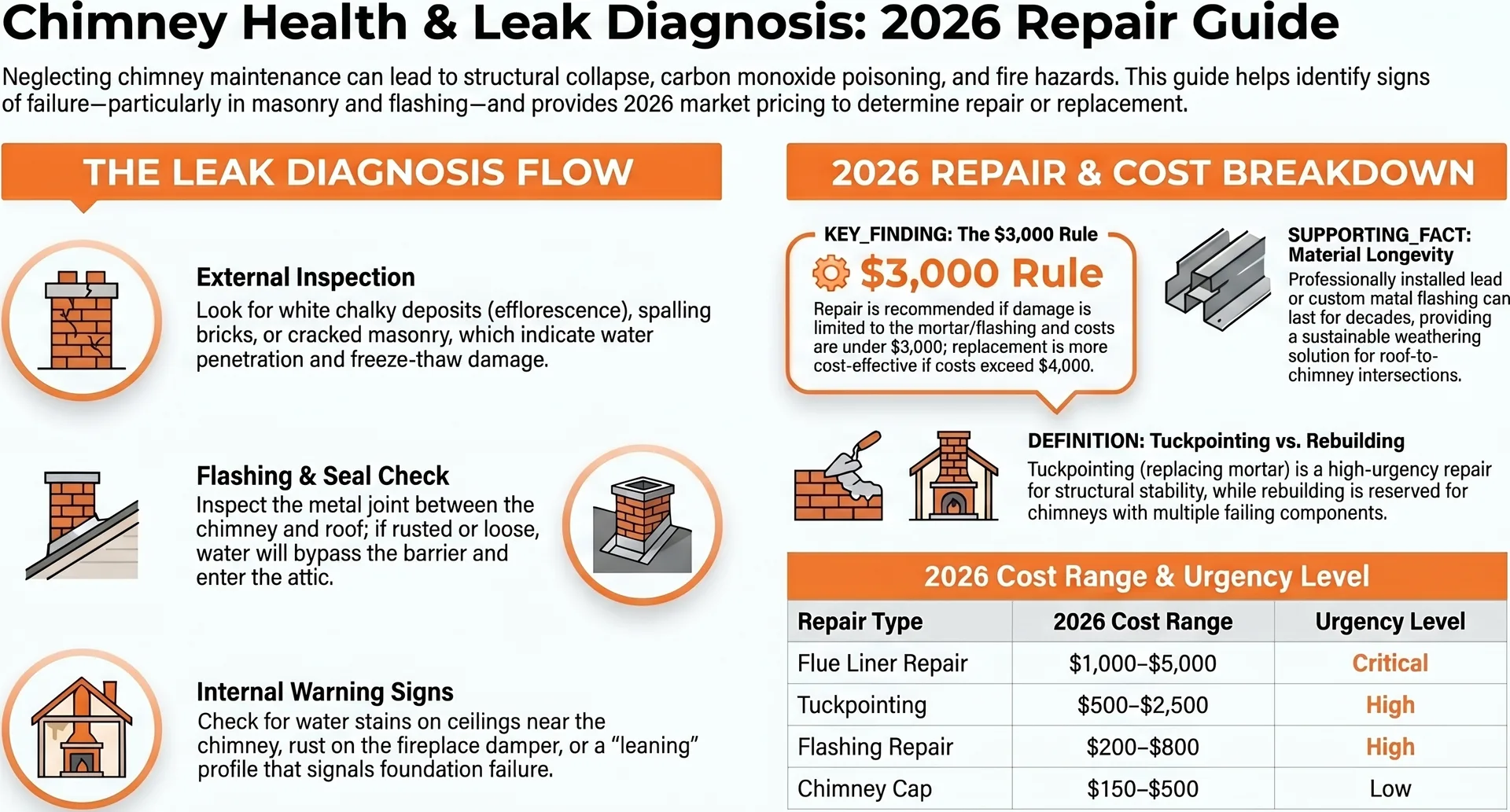
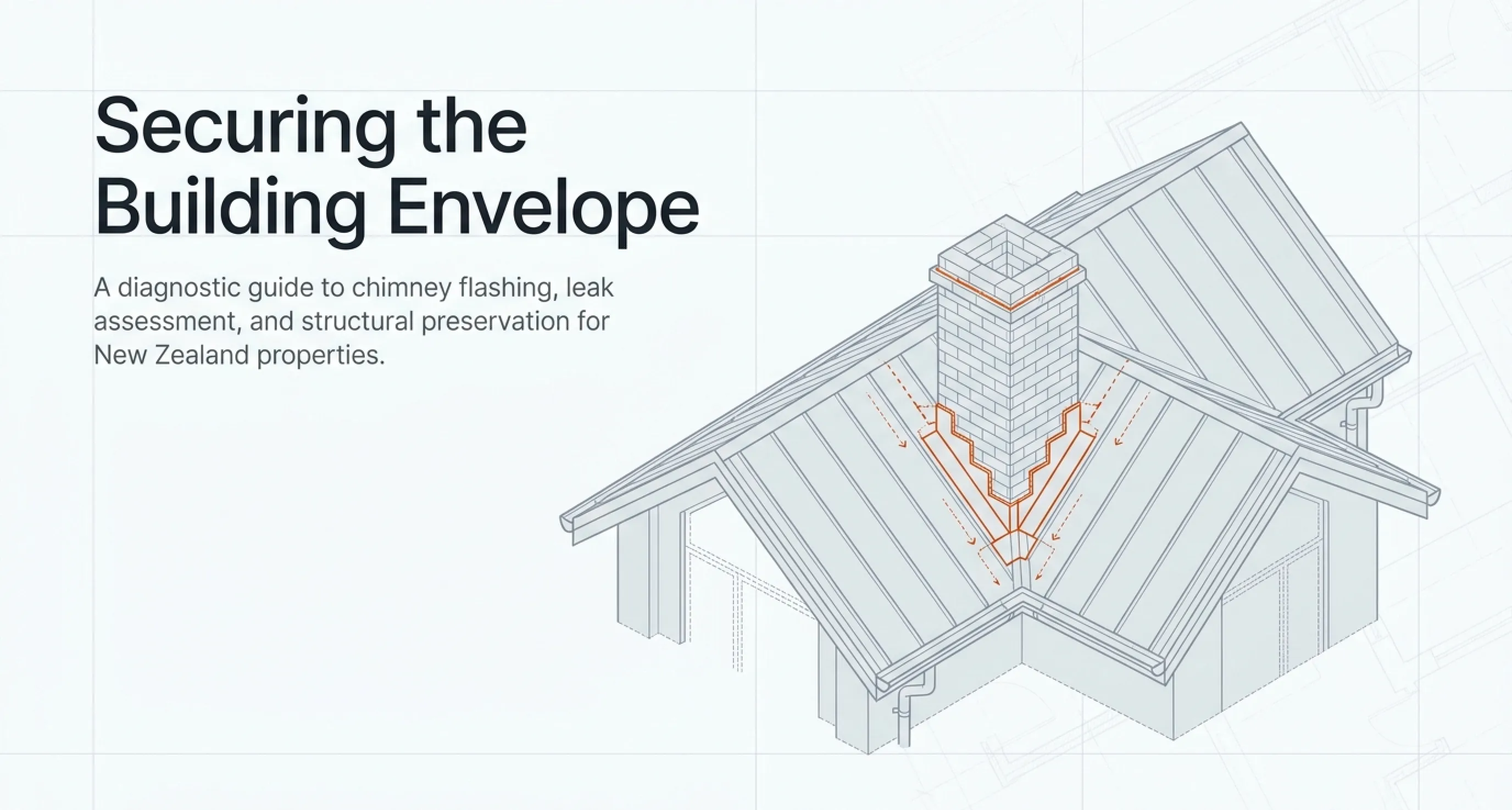
Flashing is the metal collar that seals the joint between your chimney or wood-burner flue and the roof — and it is the single most-common source of chimney-related water leaks in NZ homes. Most leaks are caused by improperly installed flashing on a recent wood burner install, or by age corrosion of older flashings. Repair tiers: minor reseal $200-$500, moderate flashing replacement $500-$2,500, major re-flash with crown work $2,500-$5,000+. Dektite EPDM (rated to 115°C) and silicone (200°C) are the modern NZ standard; traditional lead aprons are still used on heritage and high-end builds. Roof leaks above an unaffected ceiling are easy to miss — by the time water stains appear, you usually already have wall cavity damage.
Key Answers
- What causes a chimney flashing leak?
- Two main causes in NZ: (1) improperly installed flashing on a new wood-burner penetration (rushed install, wrong material, missed sealant point) — accounts for most "we just put in a wood burner and now the roof leaks" calls. (2) Age corrosion or thermal-cycling failure of older lead, galvanised, or zincalume flashings, especially in coastal salt air. Wind-driven rain finds the smallest gap.
- How do I know if my flashing is leaking?
- Five signs: (1) brown water staining on the ceiling near the chimney/flue penetration. (2) damp smell in the room with the wood burner, especially after heavy rain. (3) visible rust streaks on the flashing exterior or chimney brick. (4) bubbling or peeling paint near the chimney breast. (5) drips into the firebox itself during rain. Most flashing leaks go unnoticed for 6-18 months before interior damage appears.
- What does it cost to repair?
- Three tiers: minor sealant top-up $200-$500 (refresh the silicone bead, no flashing replacement). Moderate flashing replacement $500-$2,500 (full new Dektite or apron flashing, sealant, no roof tile work). Major re-flash + crown repair $2,500-$5,000+ (involves removing roof tiles, installing new DPC tray, sometimes masonry repointing on the chimney itself).
- Should I repair or fully replace the flashing?
- Repair if: leak is fresh, flashing material is intact, only the sealant has failed, and there is no visible interior damage. Replace if: flashing material is corroded (rust through, lead pinholes), the leak has caused interior damage, or the flashing is over 15 years old in a coastal NZ region. Replace if you find more than two failure points (rule of thumb: 2+ failures = replacement is more cost-effective).
- Who do I call — roofer, wood-burner installer, or sweep?
- Depends on the cause. If the leak started after a recent wood-burner install: call the original installer (warranty obligation under NZ Building Code C/AS1 fire safety). If the flashing is age-related: a registered roofer, ideally one who custom-makes sheetmetal flashings (Hawkins Plumbing in Wellington, Archer Roofing in Auckland do this). A sweep can identify the leak source during inspection but typically does not do flashing work.
Key Takeaways
- Most NZ chimney leaks are flashing failures — improperly installed on new wood burners or age corrosion on older systems
- Modern NZ-standard materials: Dektite EPDM (115°C) or silicone (200°C); traditional lead aprons on heritage builds
- Repair tiers: minor reseal $200-$500, moderate replacement $500-$2,500, major re-flash with crown work $2,500-$5,000+
- Flashing leaks are often invisible for 6-18 months — by the time interior staining appears, you usually have wall cavity damage
- New wood-burner leak = installer warranty obligation under NZ Building Code C/AS1; old flashing leak = registered roofer
How do I know if my chimney flashing is leaking?
Water stains on the ceiling within 1m of the chimney, damp patches on interior walls beside or below the chimney, peeling paint, mould growth in the wall cavity, or visible gaps and lifted edges in the flashing when viewed from the roof.
Water stains on the ceiling within 1m of the chimney, damp patches on interior walls beside or below the chimney, peeling paint, mould growth in the wall cavity, or visible gaps and lifted edges in the flashing when viewed from the roof. Most NZ flashing leaks appear after heavy rain — especially with wind-driven angles common in Wellington and the West Coast.
What's the difference between flashing and the chimney cap?
The cap sits on top of the flue and stops rain entering the chimney itself.
The cap sits on top of the flue and stops rain entering the chimney itself. Flashing is the metal sheet (usually lead or aluminium) that seals the joint where the chimney passes through the roof. Both can leak independently — diagnose which one is the source before repairing.
Can flashing leaks cause a chimney fire?
Indirectly yes.
Indirectly yes. Water entering the flue accelerates creosote degradation and corrodes flue liners. Compromised liners are more likely to ignite trapped creosote. Most chimney fires investigated by FENZ involve some prior water damage to the flue structure.
What sealant works best for chimney flashing in NZ?
High-temperature polyurethane sealant rated for at least 1500°C (Sika Sikaflex Pro 11FC, Holdfast Marine Bond, or equivalent).
High-temperature polyurethane sealant rated for at least 1500°C (Sika Sikaflex Pro 11FC, Holdfast Marine Bond, or equivalent). Avoid silicone — it doesn't bond well to lead. The cheapest hardware-store sealants typically last only 3-5 years before failing.
Will my insurance cover flashing repair?
Often yes if the damage is from a single event (storm, earthquake, chimney fire).
Often yes if the damage is from a single event (storm, earthquake, chimney fire). Routine wear-and-tear failure is usually not covered. Storm damage IS covered by all major NZ insurers; document the storm date and any FENZ or council notices about wind events.
How quickly does a flashing leak cause damage?
Light leaks: 12-18 months before visible internal damage.
Light leaks: 12-18 months before visible internal damage. Heavy leaks: 1-3 months. Structural damage (rotting wall studs, masonry cracking) typically appears within 2-3 years. The sooner you fix the flashing, the smaller the downstream repair bill.
| damage severity (minor seal/moderate replacement/severe rebuild) | repair cost ranges in NZD | materials (silicone EPDM Dektite, lead apron, butyl) | recommended action by symptom | warranty implications | Source |
|---|---|---|---|---|---|
| minor seal | $150–$500 | Silicone sealant, chimney cap, EPDM/Silicone Dektite | Patching small cracks in masonry or flue; replacing a damaged chimney cap; addressing minor rust on damper. | Dektite polymers often carry up to a 20-year material warranty; reputable roofing companies offer workmanship guarantees. | [1, 2] |
| moderate replacement | $200–$2,500 | Lead apron, Zincalume, Colorsteel, Aluminum, Copper, Dektite Soaker | Replacing rusted, loose, or missing flashing; tuckpointing deteriorating mortar; repairing chimney crown cracks. | Professional installation ensures performance; custom sheetmetal flashings (lead/Zincalume) provide long-lasting protection. | [1-3] |
| severe rebuild | $2,500–$5,000+ | Stainless steel/clay flue liners, masonry bricks, structural support, lead DPC trays | Addressing leaning/tilting chimneys; severe structural masonry failure; total flue liner collapse; extensive water penetration. | Significant structural work typically requires professional certification; failure to repair voids home insurance/safety standards. | [1] |
Data compiled from research by Chimney Guys
Frequently Asked Questions
Can I DIY a flashing repair?
Sealant top-up: yes, if you are comfortable on a roof and the flashing material itself is intact. Full flashing replacement: no — requires removing roof tiles or sheets, sometimes lifting the chimney crown, and getting the geometry right under wind-driven rain pressure. NZ Building Code height-work safety rules also apply. Most insurers expect professional installation for any structural roofing work.
What is Dektite and why is it the modern standard?
Dektite is a NZ-distributed range of flexible EPDM or silicone polymer flashings that bond to round flue penetrations. EPDM rated to 115°C constant; silicone to 200°C constant (250°C intermittent). Compatible with zincalume, galvanised steel, aluminium, copper, lead, even timber. Cheaper than custom lead, faster to install, and more forgiving on roof movement than rigid metal.
When should I use lead instead of Dektite?
Heritage builds where the look matters, very high temperatures (uninsulated metal flue exits over 200°C constant), or properties where 100% recyclability is specified (lead is fully recyclable at end of life). Custom-made lead apron flashings cost more and need a sheetmetal worker, but they are the gold standard for visible heritage chimney work.
Why do new wood-burner installations leak?
Three common causes: (1) the installer applied silicone where butyl or sheet flashing was needed. (2) the flashing was sized for the wrong roof pitch and could not seal at the high side. (3) the cap was not extended through the roof flashing properly, leaving a gap that fills with rain. Under NZ Building Code C/AS1, the installer is obligated to provide a watertight penetration and must return to fix any failures.
What is the warranty on a flashing repair?
Typically 5-10 years on materials and 2-5 years on workmanship from a registered NZ roofer. Lead apron flashings often carry 25-year material warranties. New wood-burner flashing installs should be warranted by the wood-burner installer for at least the initial 12 months, but Building Code obligations extend longer.
How fast does a leak need to be fixed?
Within days. Water trapped in the wall cavity under the flashing causes timber rot, insulation failure, and eventually structural damage to roof framing. A $300 sealant top-up done quickly prevents a $5,000 repair later. If the leak only appears in heavy rain, fix it before the next storm.
Will my insurance cover the repair?
Sudden accidental damage: typically yes (storm-damaged flashing, hailstrike). Gradual leaking from neglected maintenance: typically no — most NZ home insurance policies exclude "gradual damage" and require homeowners to maintain the property under the "reasonable steps" clause. Document the date the leak first appeared and call your insurer same-day.
Can the flashing leak void my wood-burner warranty?
It can void the installation warranty. If the flue rusted out because of constant water exposure from a failed flashing the installer fitted, that is on the installer. If the flue rusted because you ignored the leak for two years, the installer can argue you failed your maintenance obligations. Document everything in writing.
Think You've Got It?
10 questions to test your understanding — instant feedback on every answer
Question 1 of 10
According to roofing standards, what are the primary reasons a chimney flashing might fail and cause internal leaks?
Question 2 of 10
When comparing Dektite polymer flashings, which material is best suited for constant temperatures reaching 200,°C?
Question 3 of 10
In the context of lead chimney flashings, what is the specific purpose of a 'Lead Back Gutter'?
Question 4 of 10
At what cost threshold is it generally recommended to consider a full chimney replacement rather than just a repair?
Question 5 of 10
What does the appearance of 'efflorescence' (white, chalky deposits) on chimney bricks indicate?
Question 6 of 10
According to New Zealand standards for metal flashings, what is the required fastener frequency for a 'High' wind zone?
Question 7 of 10
Thermal expansion is a critical consideration in flashing design. At what assembled length must an expansion joint be considered for aluminium flashings?
Question 8 of 10
Which chimney repair technique specifically involves removing damaged mortar from between bricks and replacing it with fresh mortar?
Question 9 of 10
Why is a 'Chimney Crown' repair considered urgent if cracks are detected?
Question 10 of 10
For roof penetrations like chimneys, when is it necessary to provide additional support framing around the hole?
Need a chimney sweep?
Tell us where you are and what you need. We'll match you with a verified local sweep and have them in touch within one business day.